
He was a Toronto industrialist … until they sent him to the sanatorium
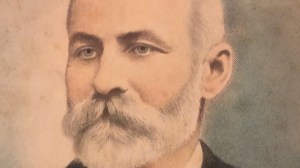
This is my great-grandfather, Robert Kilgour — a handsome dude! It’s a haunting, melancholic portrait, a black-and-white photograph colourized by hand I believe. His beard and countenance resemble Sigmund Freud, who lived during roughly the same era in a different part of the world.
Robert was a second-generation Canadian, born in 1848 in Beauharnois, Quebec, on Montreal’s south shore, the son of 1829, first-generation Scottish immigrants, William Kilgour and Ann Wilson. As a young, single man, Robert moved to Toronto in 1868 with his sister Maggie and her husband, working for them as a bookkeeper, then his younger brother Joseph joined him in 1870. By 1876, Robert and Joseph had registered a company named ”Kilgour Brothers Paper Manufacturing”, which became their major life’s work.

Together, they capitalized on a late 19th century packaging innovation — the flat-bottom paper bag! — and built a multi-storey factory to mass-produce bags and cardboard at 21 Wellington Street West, now the financial heart of downtown Toronto. They prospered, and expanded their premises to 23 Wellington, later in the century.
Robert brought Clara Govan of Glasgow (eight years his junior) to Quebec, married her in Beauharnois in 1886 (where much of his family still lived), and they raised three sons together in Toronto. Their youngest son, Arthur, died in 1917 when the plane he was piloting crashed during a training exercise in the UK. Their eldest son, another Robert*, was my grandfather.
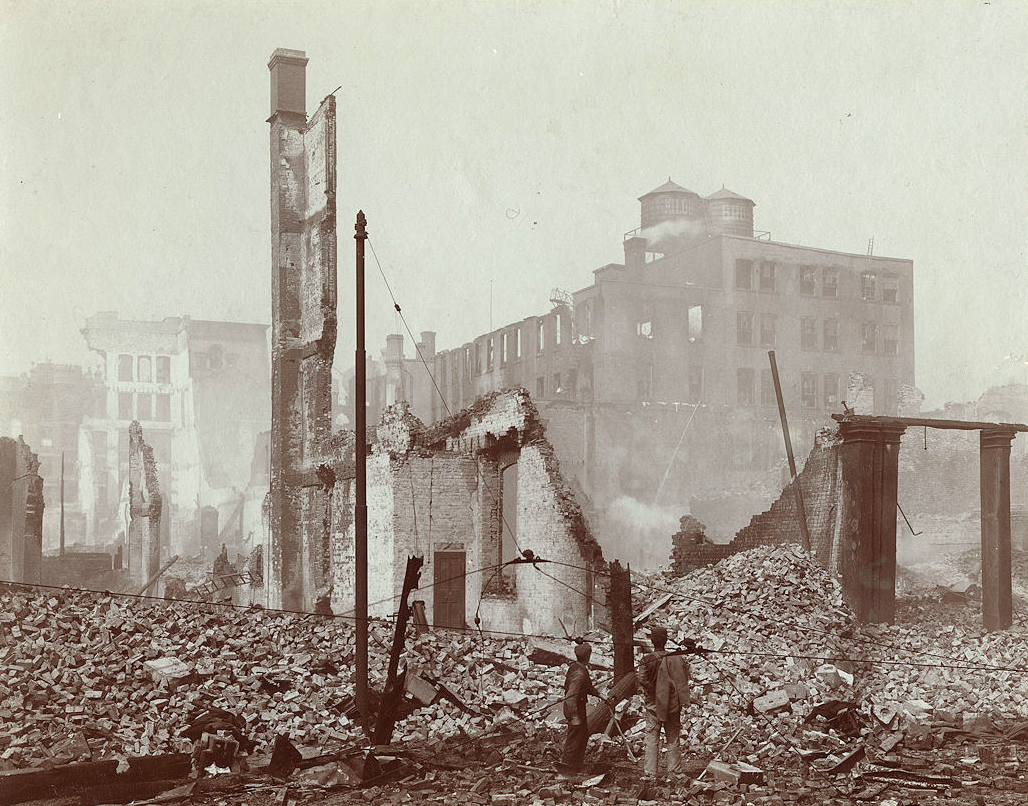
Adversity struck Robert and Joseph in 1904, when the Great Toronto fire burned through the city’s downtown core on the evening of April 19. But the Kilgour brothers had the foresight to install towers on the roof of 21-23 Wellington (see background of this photo), which provided water to protect the building and halt the blaze before it reached Yonge Street. Nearly 100 buildings were destroyed in the calamity, decimating the downtown, but not a single life was lost. The post-fire photos resemble scenes from WWI, ten years later.
Despite his business success, personal adversity also stalked Robert, who suffered from mental illness throughout his adult life. Clara eventually sent him away to the Homewood Sanatorium of Guelph sometime in the first or second decade of the 20th century — perhaps in his late 50s.
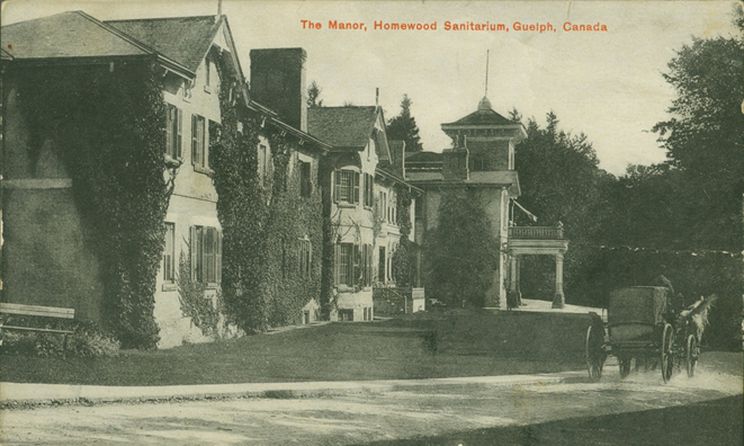
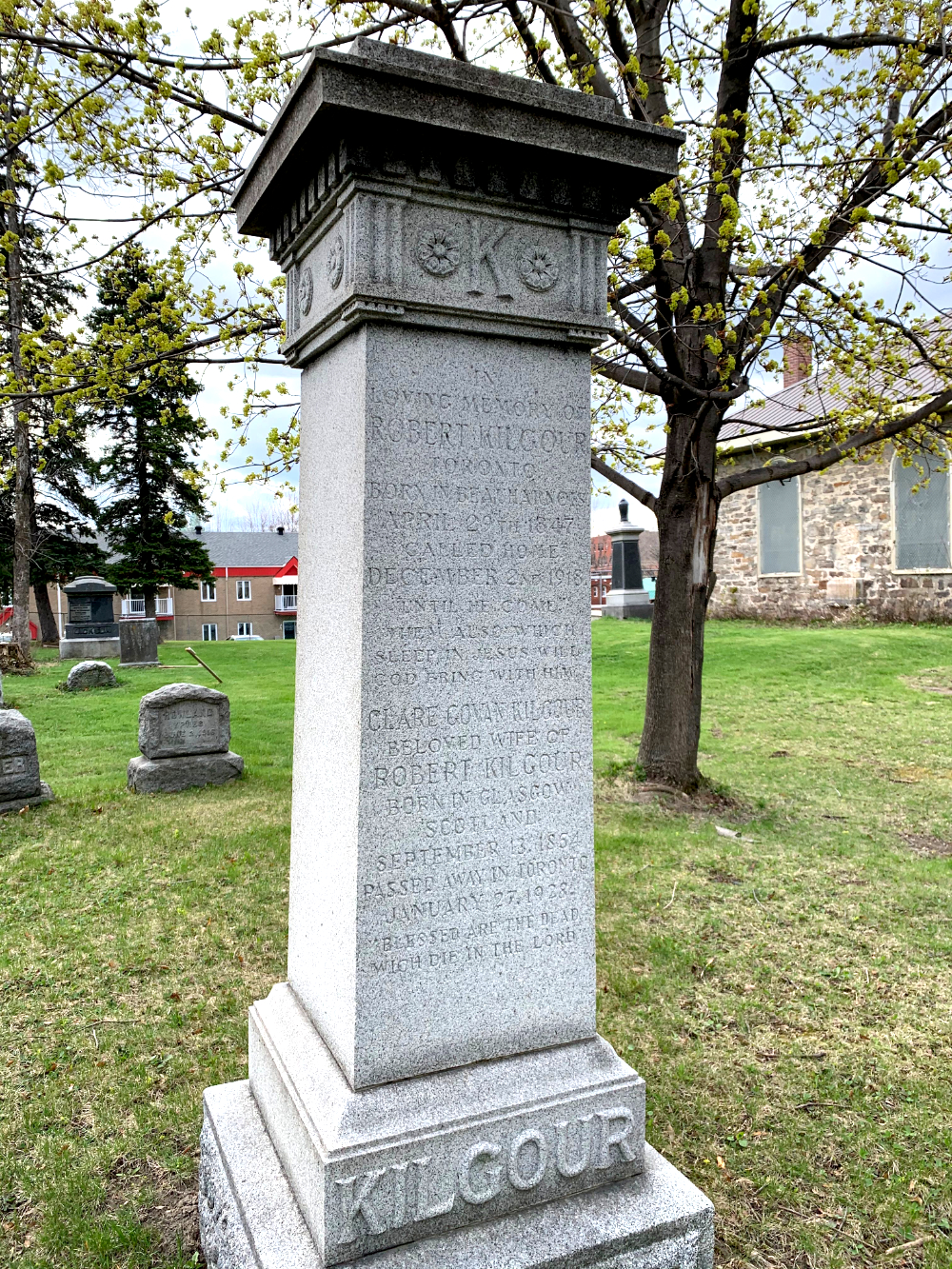
Family lore is that Clara declared her husband Robert “dead to me” as he was taken away by car. And she didn’t see him again, never making the 50-mile trip to visit him in Guelph, an aunt of mine reported. He was effectively banished from the family and died at the Guelph institution in 1918 at the age of 71. How did he die, was there a funeral? I’m not sure, but he was buried in the churchyard of St. Edward‘s Presbyterian Church in Beauharnois, and his wife Clara joined him there ten years later upon her death.

I think of Robert Kilgour when I pass today’s Homewood institution, and try to imagine him there. The private institution was founded in his lifetime (1883) to treat mental illness and substance abuse, and it still plays a significant role in Guelph, with publicly-funded beds as well.
I’ve visited inside the modern-day Homewood — family members and friends have been treated inside its walls. It’s hard to know if the place brought comfort to the last decade of Robert’s life, or if it felt like a prison to him. His eyes appear distant, even ghostly. What’s he thinking about behind that vacant stare?

* My Dad’s family wasn’t very imaginative with male names, repeating Robert, or Arthur, or William for many generations. We’ve put an end to that now, but the less common “Govan” family name still lingers as a middle name. I’m not sure why that is, as Clara (Govan) is the villain of this story. But maybe it’s best not to judge what your ancestors did 100+ years ago, in another era, when mental illness likely carried an even larger stigma than it does today.
Postscript: whither Joseph?
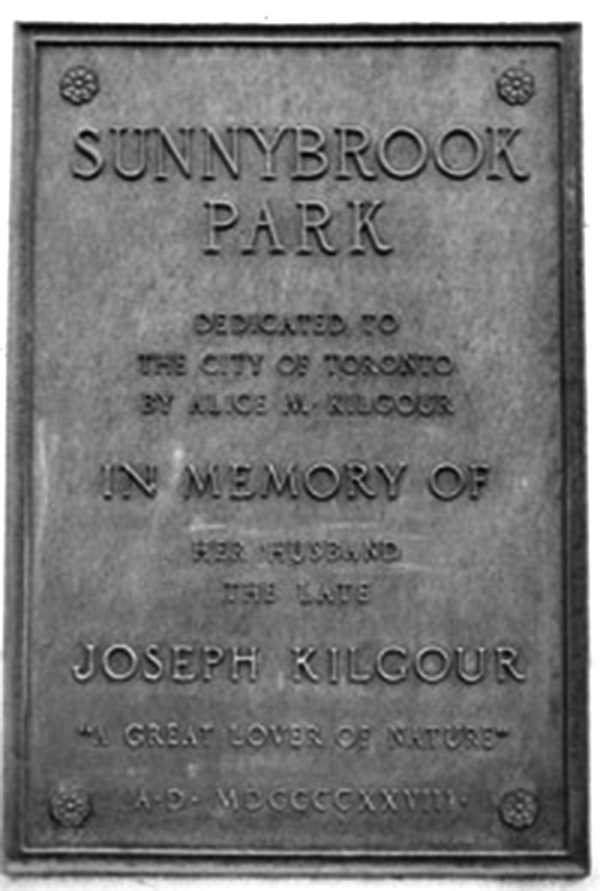
My great-grandfather’s younger brother and business partner Joseph carried on with the paper business after Robert was exiled to Guelph, and also got involved with corn syrup manufacturing, another new product in the early 20th century. He and his wife Alice Grand were childless, and when he died in 1925, Alice decided to gift their “Sunnybrook Farm” country home on the outskirts of town to the City of Toronto. (At the bottom of the plaque, below Joseph’s name, it says “A Great Lover of Nature.”)
That land is now Sunnybrook Park and the grounds of the Sunnybrook Health Sciences Centre, in the Burke Brook ravine between Bayview and Leslie Streets near Eglinton Avenue. Among other things, the hospital now specializes in mood and anxiety disorders, and brain research.
There is no road traversing the ravine across the Sunnybrook property, linking the two busy north-south arteries. That was part of the deal specified by Alice when she donated the land to the city in 1928 in memory of her husband. It forever altered the urban geography of Toronto, just before the city’s post-war growth-spurt pushed its boundaries far north of Eglinton.
That’s a nice order of succession: private wealth from 19th century paper bag manufacturing transforms into public greenspace (and trees) in the middle of 21st century Toronto.


 I’m Art Kilgour, a graphic designer by day, but I got my start as a writer, in the journalistic vein. So this blog is a continuing outlet for that part of my brain. I write about my passions, my family, and other stuff that interests me. Enjoy!
 the write stuff
Art,
Alison sent me your link. Enjoyed the story on Robert. Sad, but mental illness was an embarrassment back then. I also read your description of the team relay. Having run the jasper-banff relay many times it brought back some great memories. Anyways, stay safe and have a good Christmas, whatever shape it takes this year. Bill Kilgour, Edmonton
I came across this, and your piece about your uncle Arthur Rutherford Kilgour, on Ancestry, and was much interested in both. My own great-grandfather, Charles Edward Wingate, was part of a group of young Glaswegians, dedicated to religious ministry among the poor of Glasgow, that included Robert Cecil Kilgour, Robert Fleming, William B Sloan, Clara Govan and her brother Arthur (and at least one sister), and my gggf’s brothers, among others. The group was led by his older brother William Wingate, who was to become a minister some years later. I believe it was called by a couple of different names, one of which was the McGill Institute.
My gggf went first to the Dakota territories before taking his wife back to her native Ontario after about 10 years there. They had only occasional contact with the Toronto Kilgour/Govans, I suspect because life had not been kind to my gggf and his little family, and they were no longer on an equal footing socially with their old Glasgow friends. Back in Scotland, Clara Govan’s brother Arthur married my gggf’s cousin Bella Cunningham, so I suppose you and I are vaguely related by marriage. The old Kilgour and Govan families have always fascinated me as much as my more direct ancestors, and I appreciate your interesting portraits. If you would like more information about the Glasgow activities of the young folk I mentioned, I’d be glad to share what I have.
Oh, BTW, I made my living for several decades as a writer (amongst other things), and one of my companies was called “The Write Stuff.” The other was “Write On!”
Cheers,
A distant cuz
Very interesting and I’ve enjoyed the details. Thank you. Is there also a connection to J.W. Kilgour & Bros., Limited. Beauharnois, Quebec, Canada?
Yes, my great grandfather and great uncle (Robert and Joseph) were the youngest brothers of John Wilson Kilgour. They were all born in Beauharnois. Robert and Joseph moved to Toronto and established businesses there, in the last decade or so of the 19th century. J.W. Kilgour remained in Beauharnois and established the furniture business there. What is your interest or connection to my story and family?
Art
I googled Kilgour Brothers because I have paper roll stand with the Kigour Bros Manufacturers Toronto plaque on it. It’s seen the test of time. If this is of any interest to you I’d be happy to pass it on.
Thanks Graham. I had the same device! I eventually discarded (too bulky) but kept that amazing plaque. That’s pictured in the post.
So I’m just curious as to where my grandfather came into this. Knealy513@gmail.com
Better thru email
We do have info on the family in our records at St Edward’s Church, Beauharnois. Contact me through the church email at church.beauharnois@gmail.com
My grandfather Ken Coulthard…his uncle was Joseph kilgour. I believe Walter Coulthard married one of the kilgour girls of beauharnois.
Yes, Walter Coulthard married Isabella Kilgour, sister of both Joseph and Robert.
so my grandfather s grandmother was Isabella kilgour?
Hello Bill, a very interesting story. We may have a connection as my ancestors emigrated from Ireland in the early 1940’s and had a farm in the Sunnybrook area that may have been sold to the Kilgours. The family patriarch was Hugh McCullough (wife Eliza Reid) and the farm passed down to my grandfather William John McCullough. Interestingly we also have a family story handed down regarding the paper bag and the forced commitment to an asylum scandal but our version had it that the victim was a woman who actually invented the revolutionary bag folding process , perhaps an employee?, but the factory owners didn’t want to pay her any royalties so colluded with her family to have her committed for a price to keep her quiet. I don’t know if she was related to our family but my mother and aunt heard this story from my grandfather.
Ceilidh Mckay
Correction to post, my ancestors emigrated in 1840’s
Thanks for your reply Bill. The 1940 date was an auto fill error. The correct date for the emigration of Hugh and Eliza McCullough was in the early 1840’s . As for the other story it was handed down through the family and told to me by my mother and aunt. I have very few details to add other than that the woman was likely sent to the Penetanguishene asylum as she was brought home to be further victimized on Saturday evenings and then returned to the asylum on Sunday. I am aware of the American woman factory worker who invented a similar process but she has no connection with the area so I am assuming, if the story I was told was true, it would have been a different process.i had dismissed the story as likely not factual until I read the story of your great grandfather and was struck by the similarities. As for dates it would likely coincide with a patent registered by the Kilgours of which I have no knowledge. The signature of a doctor would have been required for commitment in both circumstances.
Hi Art- this is an old post but maybe you’ll still see it. I love this piece about your gg grandfather trying to figure out how we’re related. My great grandfather is John Wilson Kilgour, whom you reference as the brother who stayed in Beauharnois.
Karen Kilgour
Hi Karen. Thanks for commenting. Even though it’s an old post, I get notifications.
I think we’re third cousins, since your great grandfather (J.W. Kilgour) and mine (R.C. Kilgour) were brothers. You call him my g-g grandfather, but he was my great-grandfather — his brother Joseph was my g-g uncle — very confusing I know!
Is your father John Willard Kilgour, born in Beauharnois in 1941? Then moved to Toronto at some point? Do you live there now? It seems like we’re almost a full generation apart (I was born in 1958) since my dad was born in 1923. I have other Beauharnois third cousins in Toronto, descendants of William Kilgour, who was also in the furniture business with your great grandfather.
Art Kilgour, artkilgour@gmail.com
Hi Art- yes that is my Dad and yes, I live just outside of Toronto, in ajax. Do you mean Bill Kilgour? I see he posted here in 2020. I believe he was my Dad’s uncle.
Please let’s correspond by email Karen. This is too awkward.
artkilgour@gmail.com